Welcome to Cobuilder Training Portal
With Risk management templates in the HSE Management module, you can carry out risk assessments on the chemicals in your projects faster and more consistently.
A template is a predefined risk assessment you can reuse. Create it once, and you don’t have to start from scratch every time you assess a chemical.
Create a new template
1
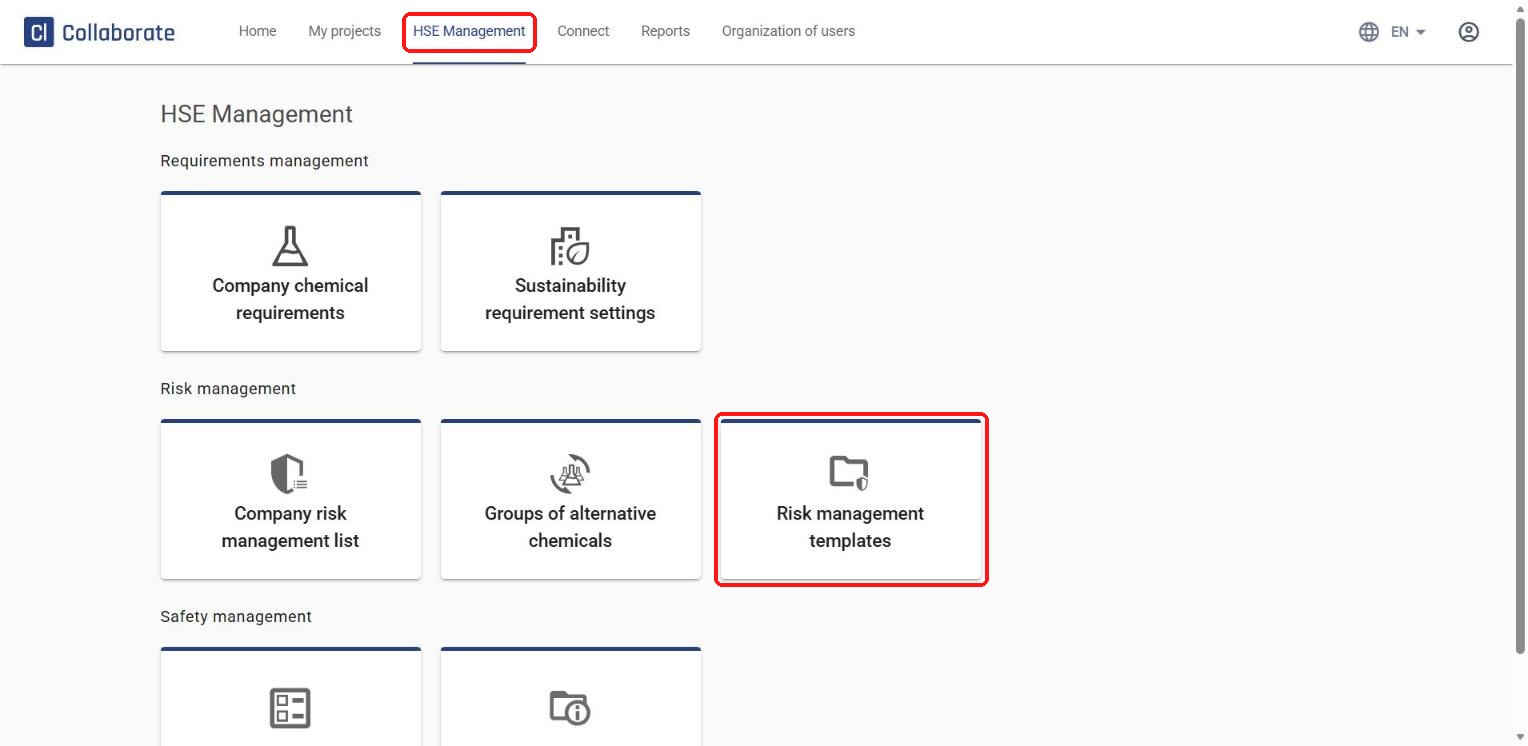
Go to HSE Management in the top menu and select Risk management templates.
2
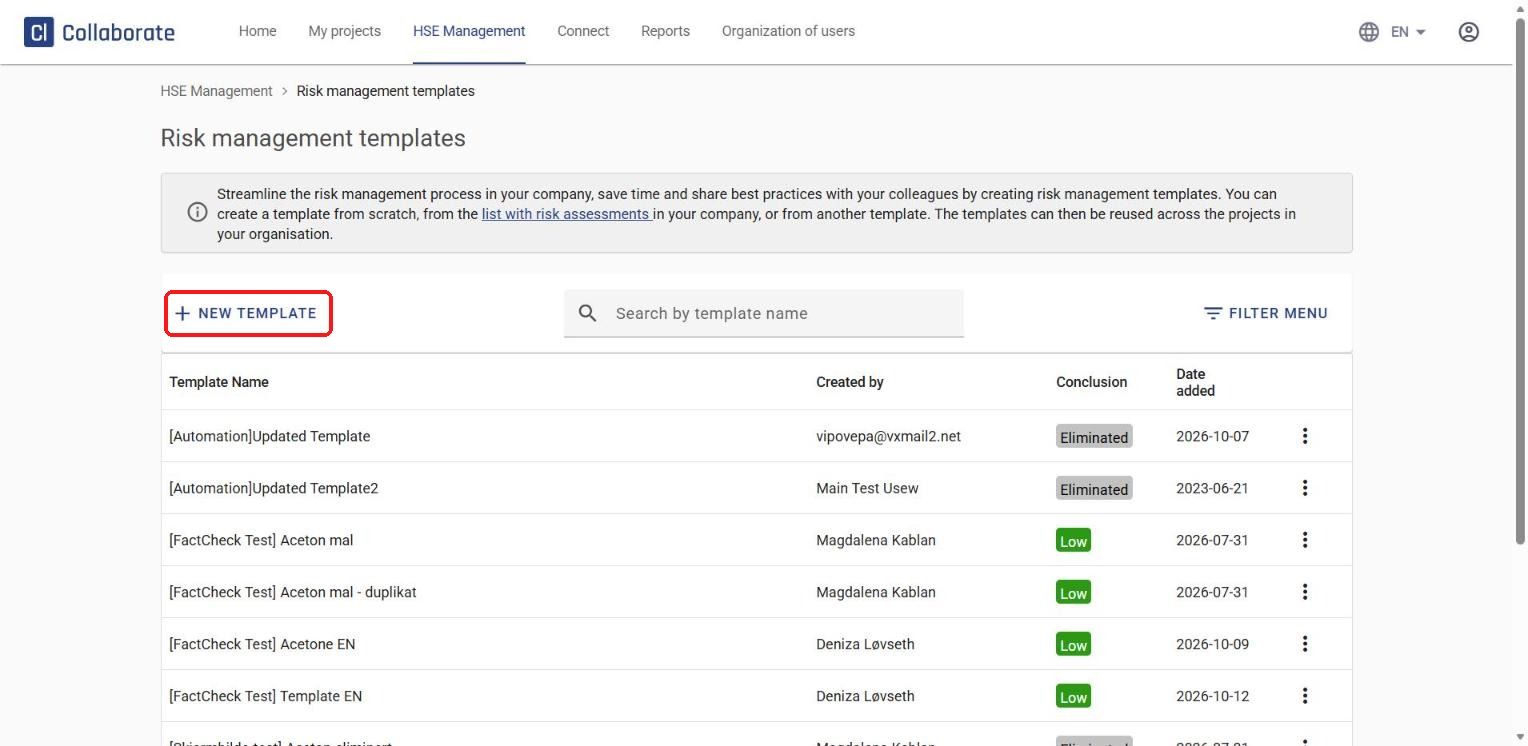
Click New template to start a template from scratch. To start from a template you already have, you can duplicate it instead – see How to create a risk management template from an existing template.
Risk assessment
3
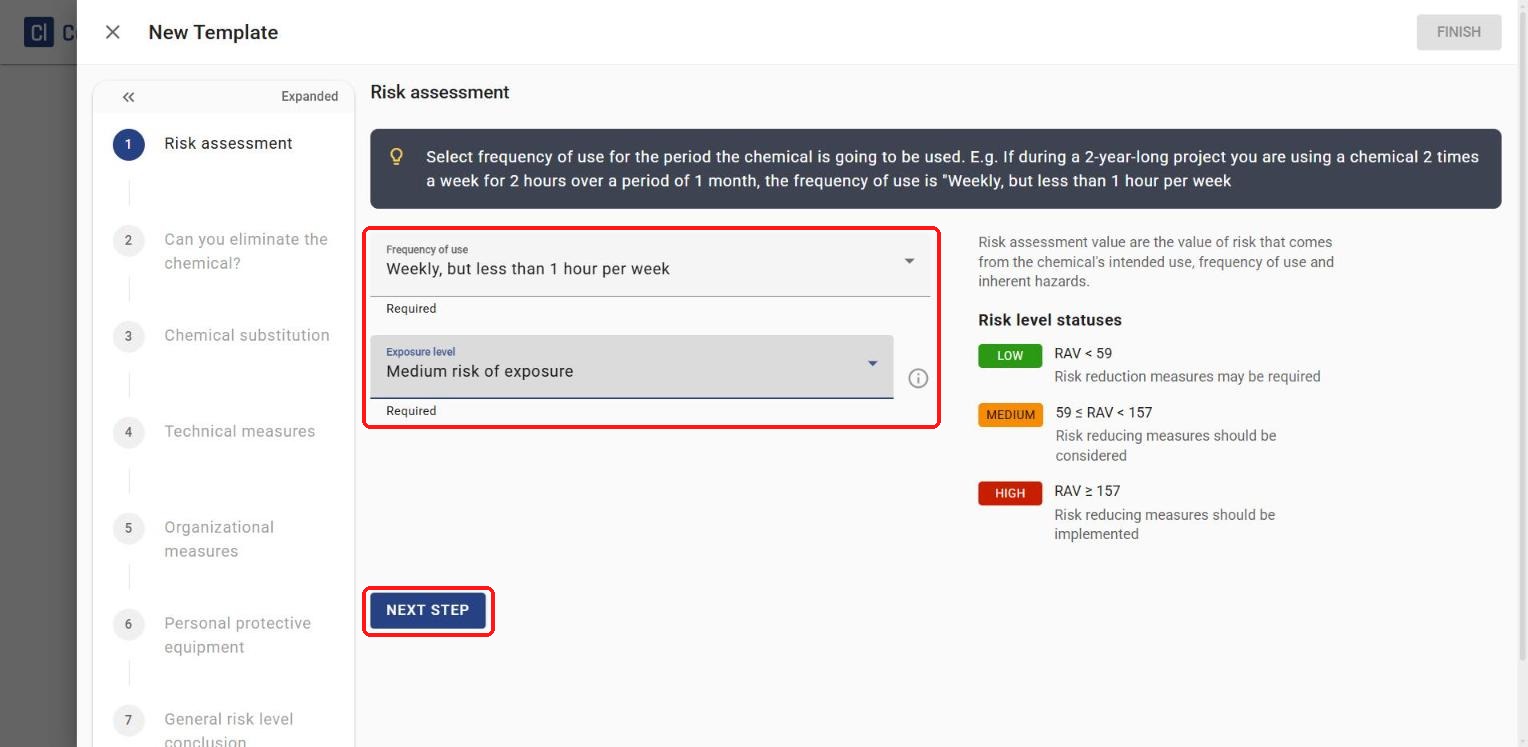
Select the Frequency of use and Exposure level for the chemical. Click the ⓘ icon next to Exposure level to see what the different levels mean. Click Next step.
Elimination and substitution
4
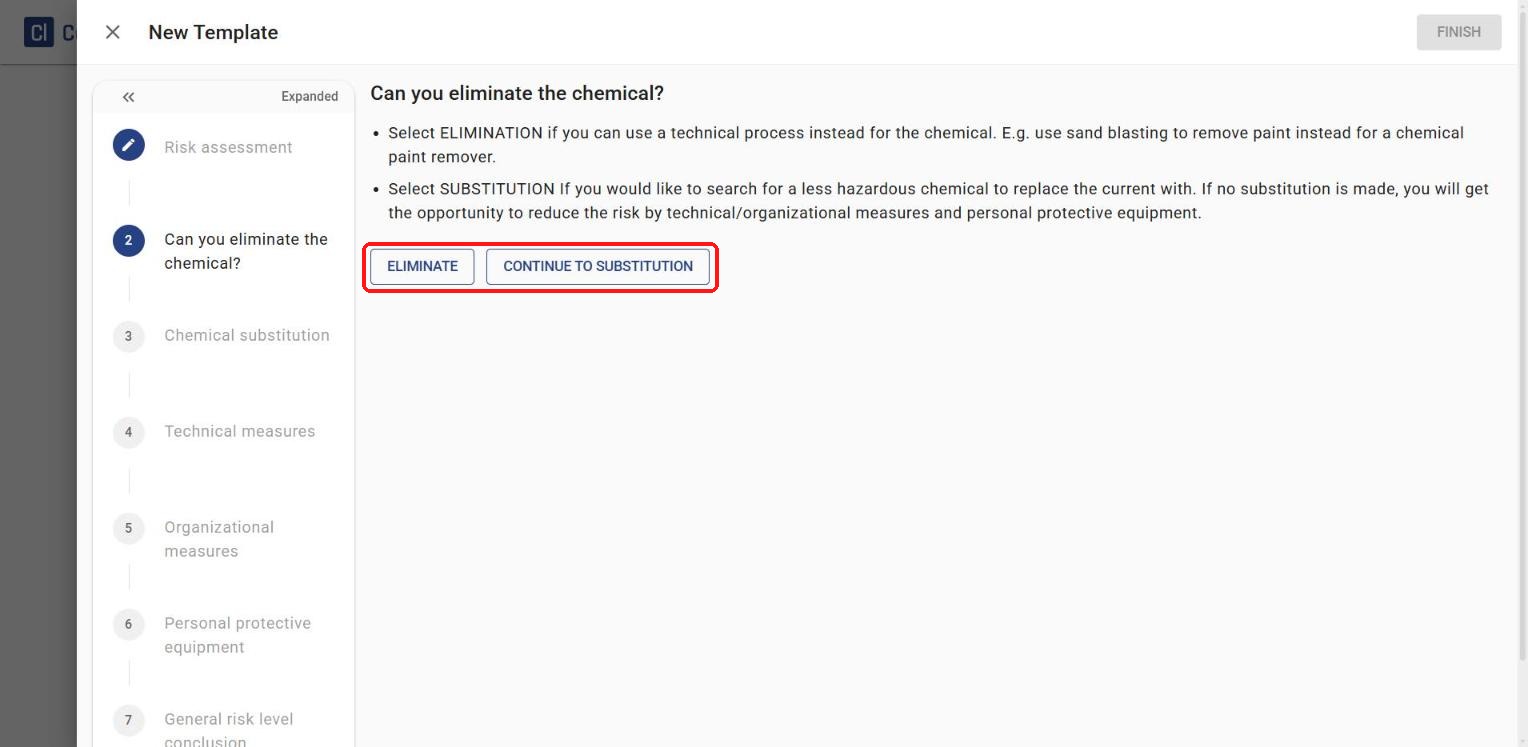
The next step asks whether the chemical can be eliminated. Click Eliminate if it can be replaced by a technical process – write a comment (required) and click Finish. The template is then complete, and you go straight to naming it. Click Continue to substitution to carry on with the process instead – the comment is optional here.
5
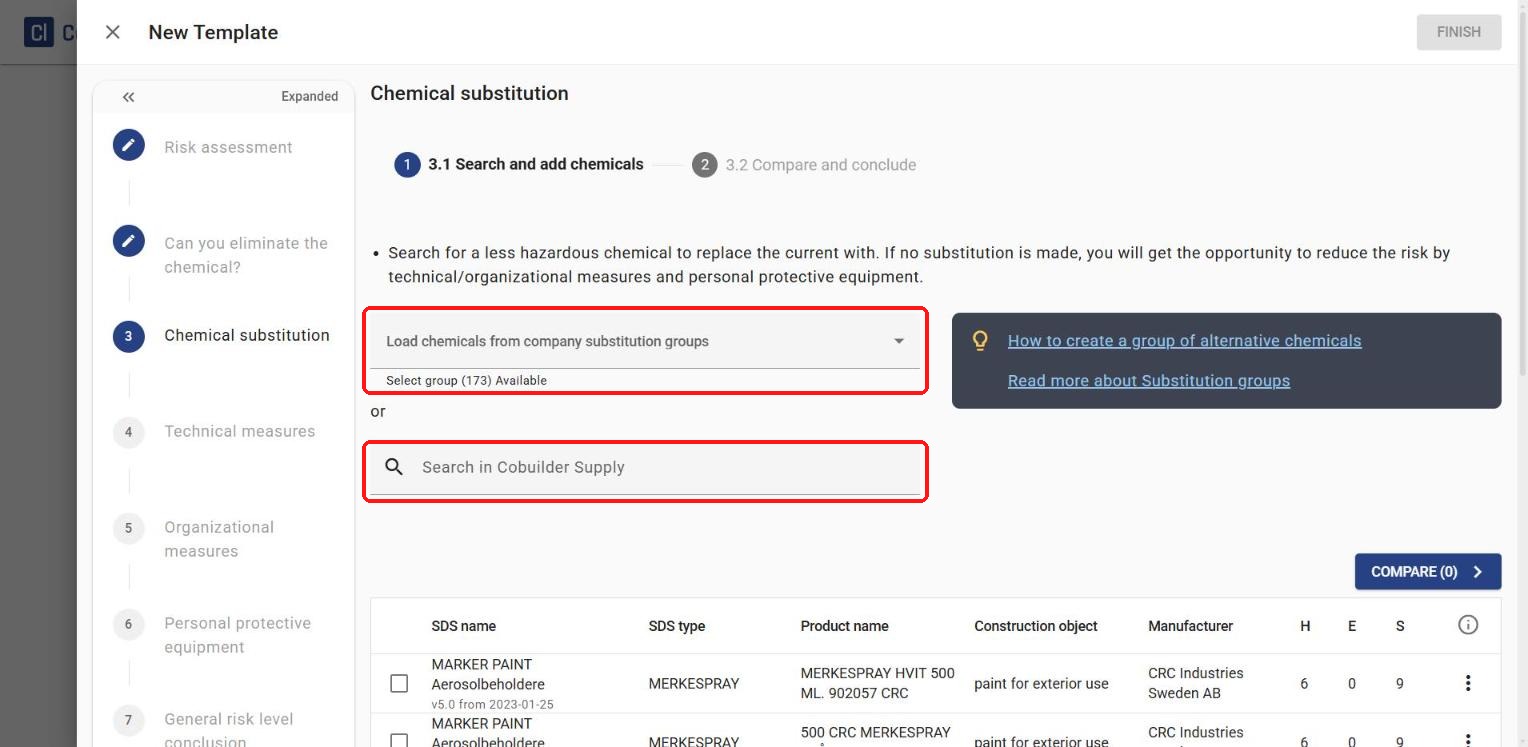
In the substitution step, find a less hazardous chemical to replace the current one – either by loading chemicals from your company substitution groups, or by searching in Cobuilder Supply. Read more in How to create a chemical substitution group.
6
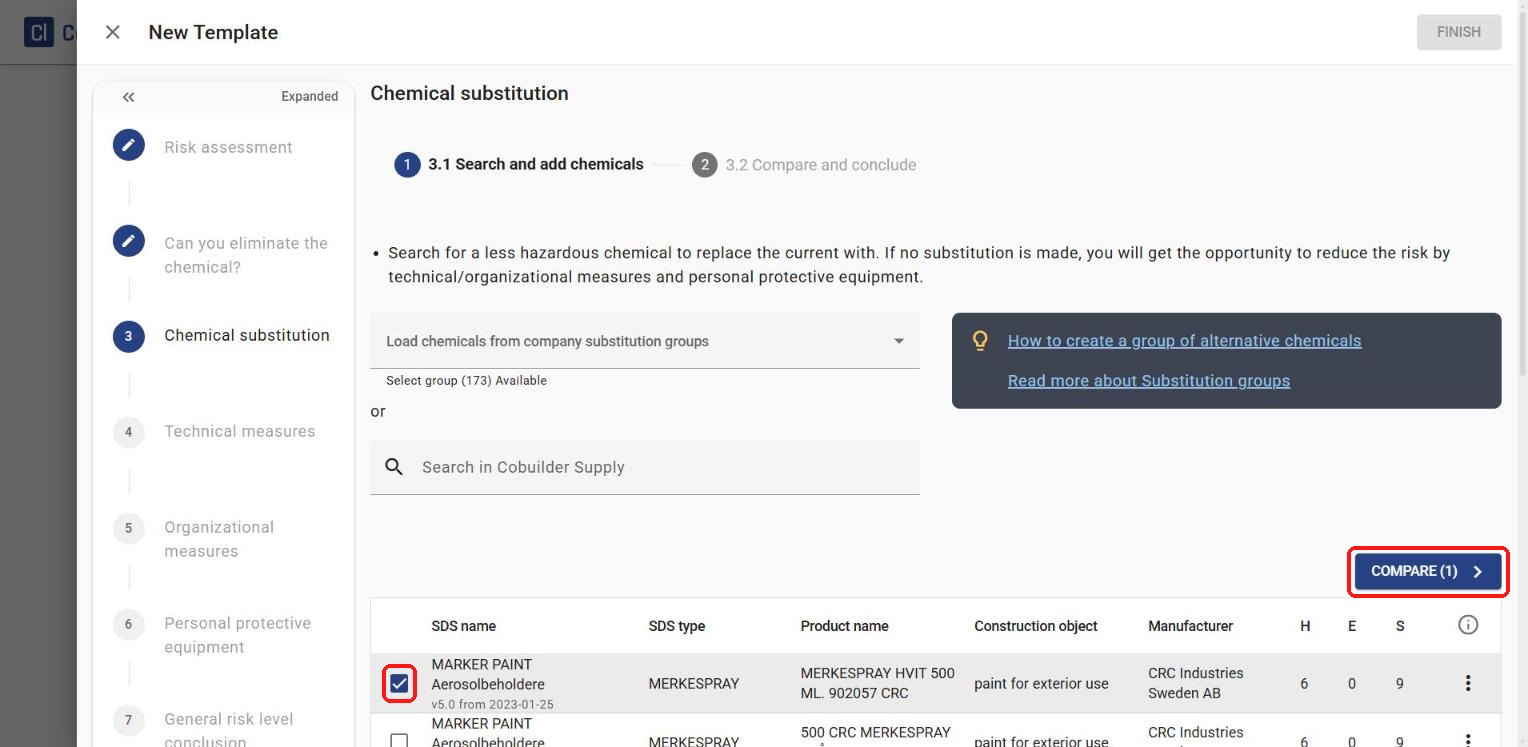
Tick the alternative product in the results and click Compare.
7
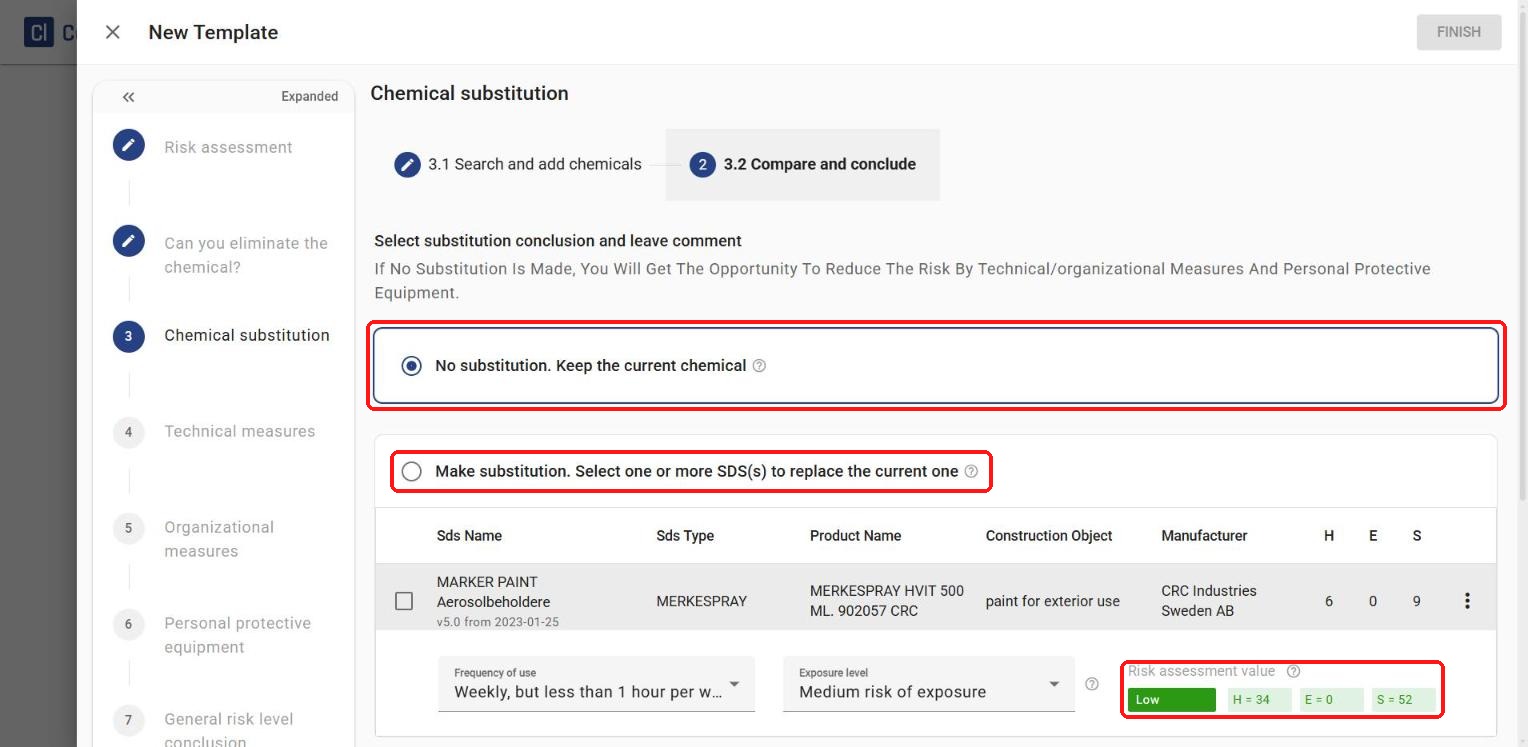
The system shows the risk assessment value for the alternative, with the same Frequency of use and Exposure level as the original preselected – you can adjust these for the new product if needed. No substitution. Keep the current chemical is selected by default.
8
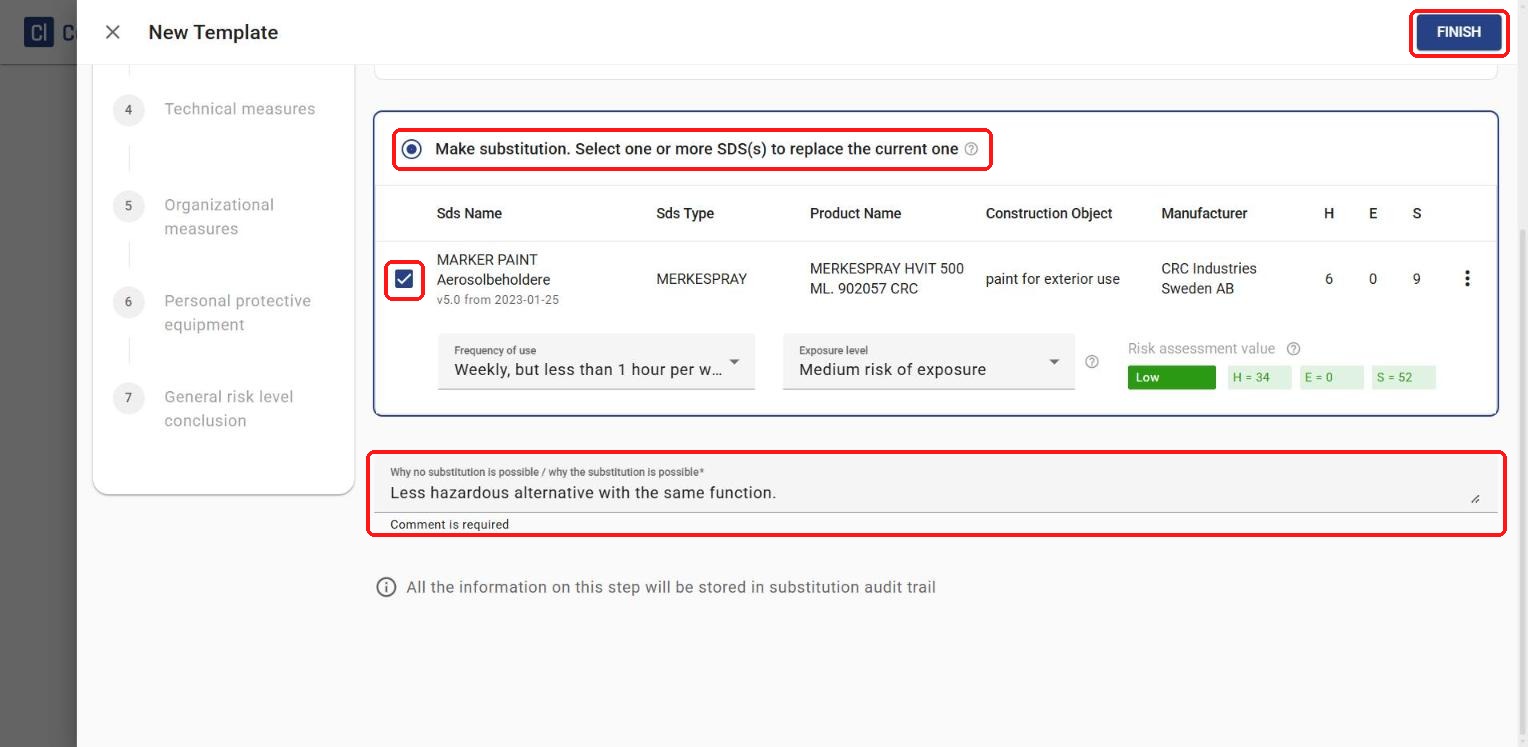
If the new product is a good alternative, select Make substitution, tick the product, write a comment explaining why (required) and click Finish. The template is then complete, with no further steps for measures or protective equipment.
9
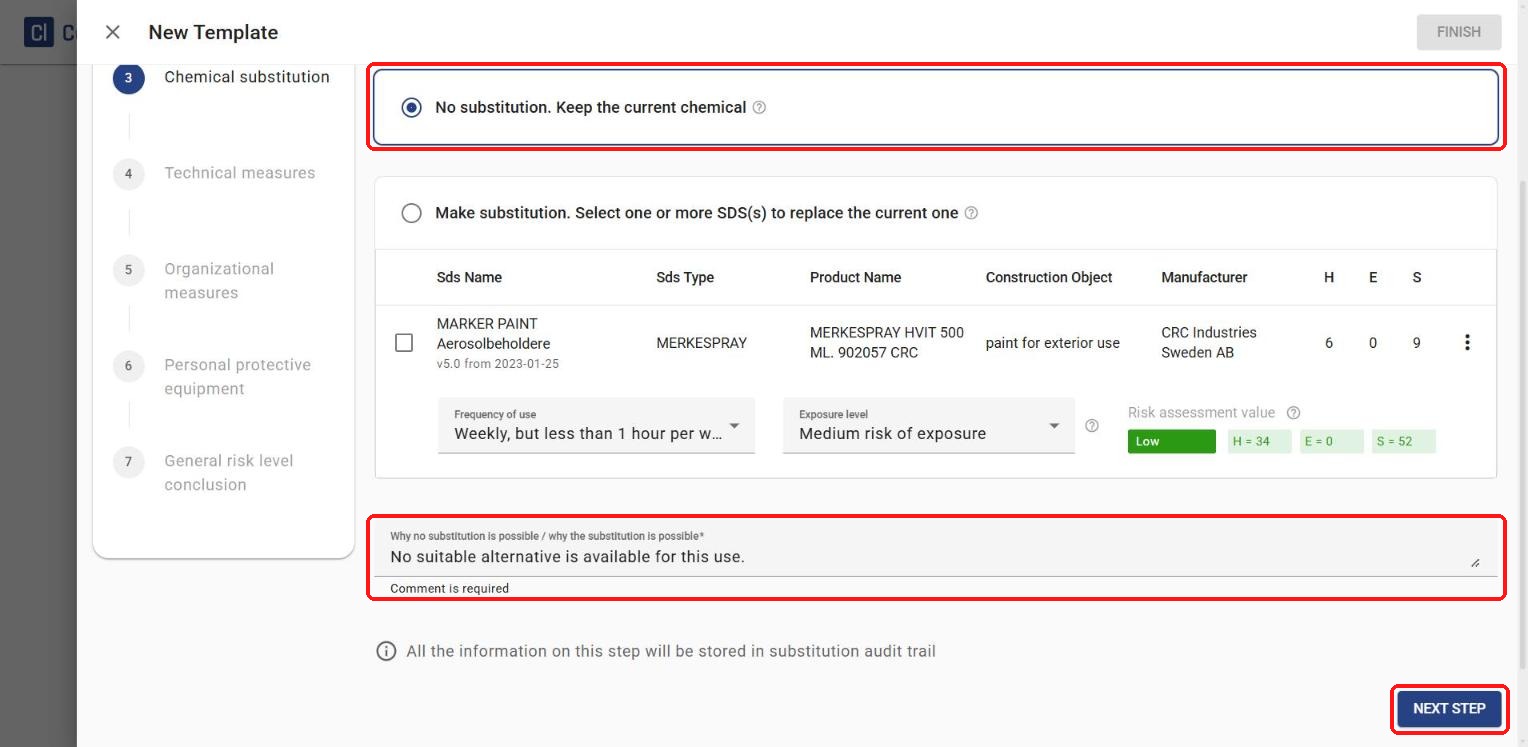
If you keep No substitution, write a comment explaining why (required) and click Next step to continue with measures and protective equipment. See How to substitute a chemical using the substitution group for a full walkthrough of this step.
Measures to reduce the risk
10
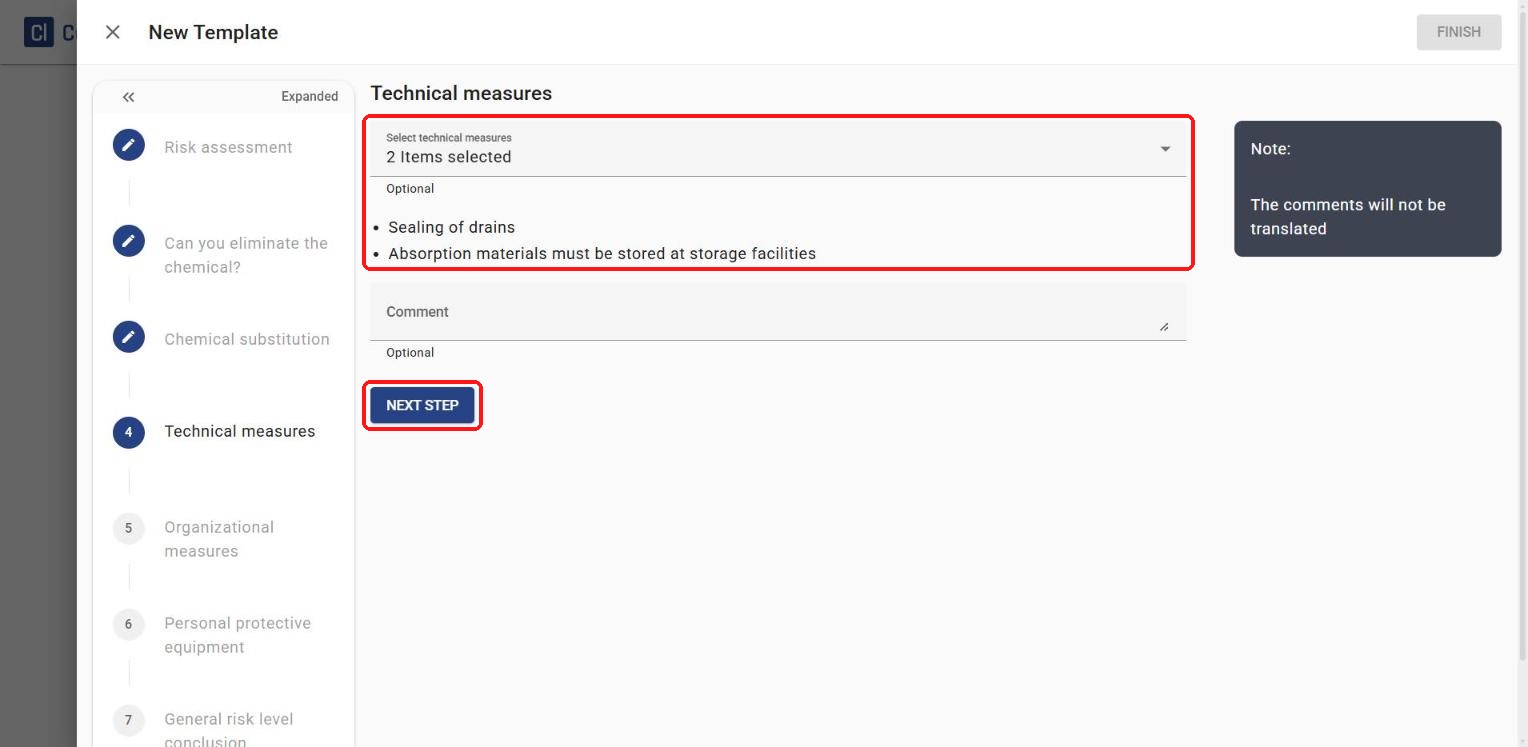
Next, select Technical measures. Open the drop-down menu and tick the measures that apply. The comment is optional. Click Next step.
11
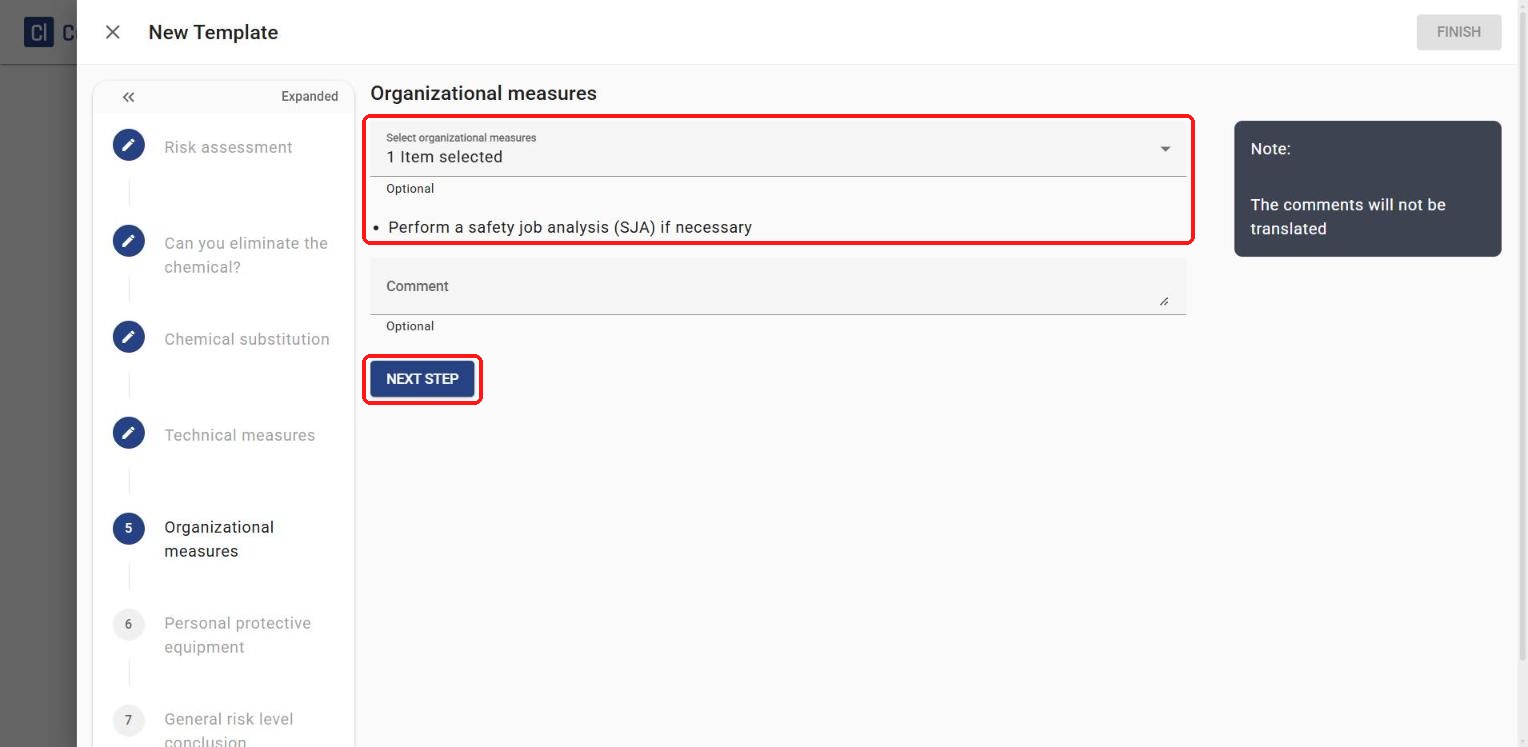
Then select Organizational measures the same way, from the drop-down menu. The comment is optional. Click Next step.
Personal protective equipment
12
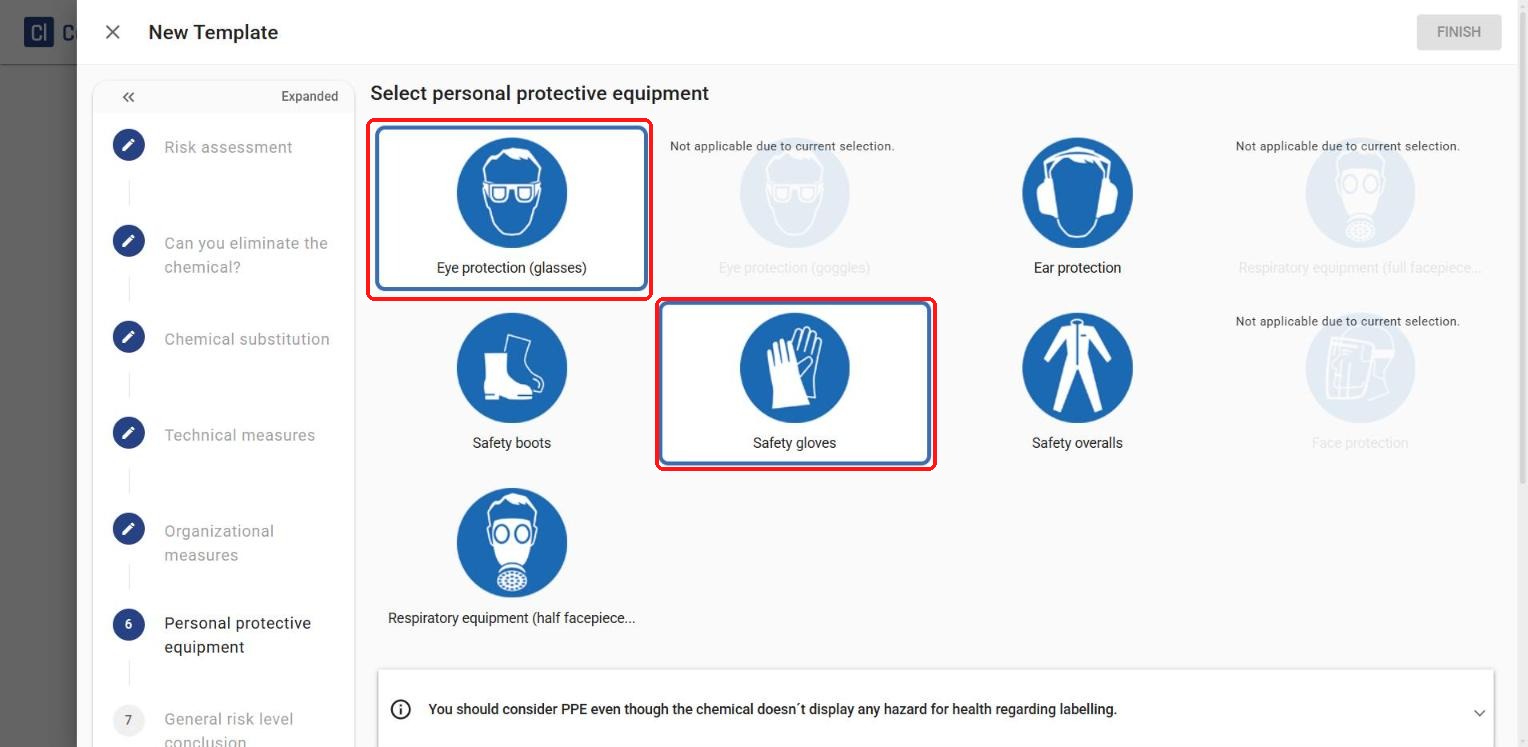
Select the personal protective equipment that is used. When you select one option, any equipment that can’t be combined with it is automatically marked Not applicable due to current selection. The more relevant types you select, the lower the calculated health risk – but only select equipment that is actually used when working with the chemical.
13
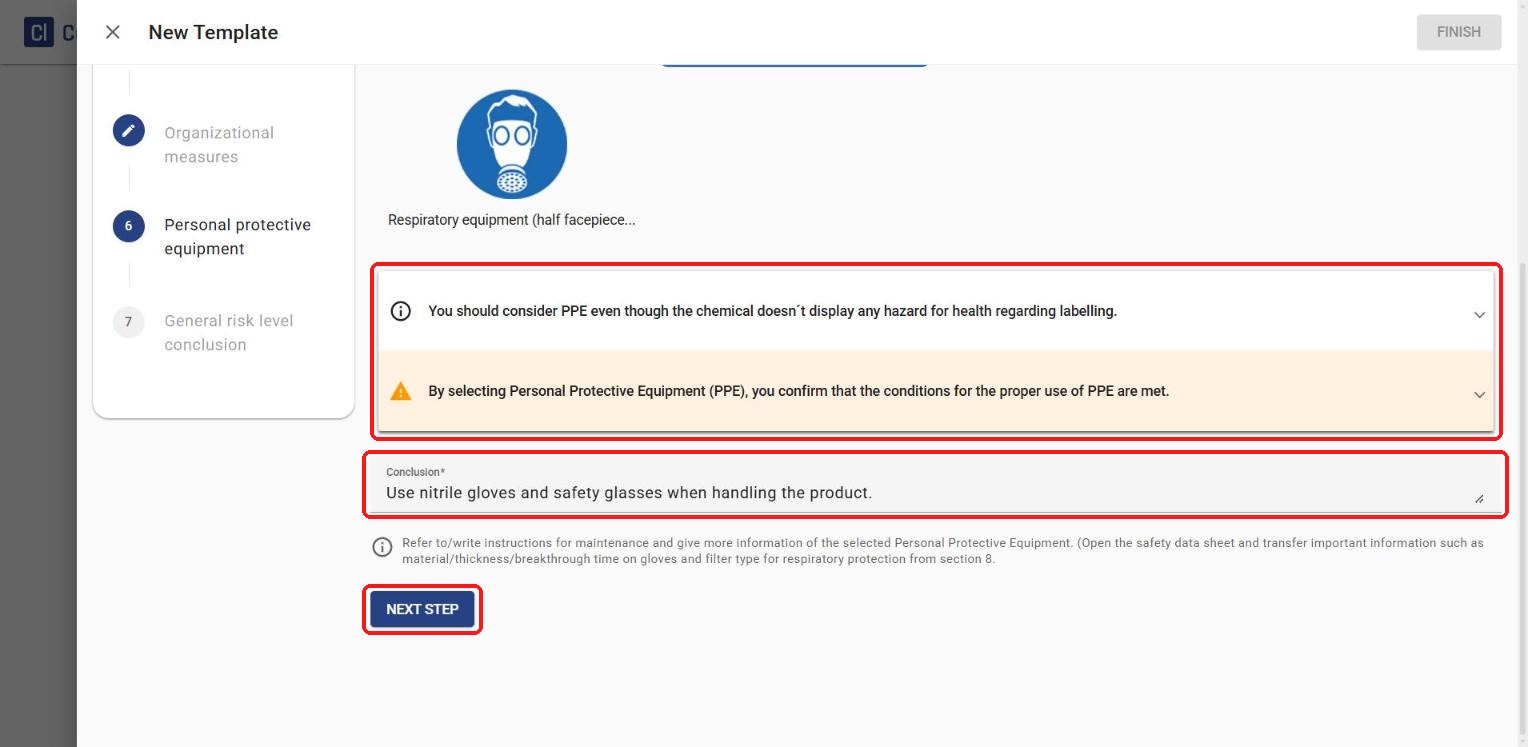
Note the two messages on this page: PPE should be considered even if the chemical’s labelling shows no health hazard, and by selecting PPE you confirm that the conditions for its proper use are met. Write a Conclusion (required) and click Next step.
Final conclusion and saving the template
14
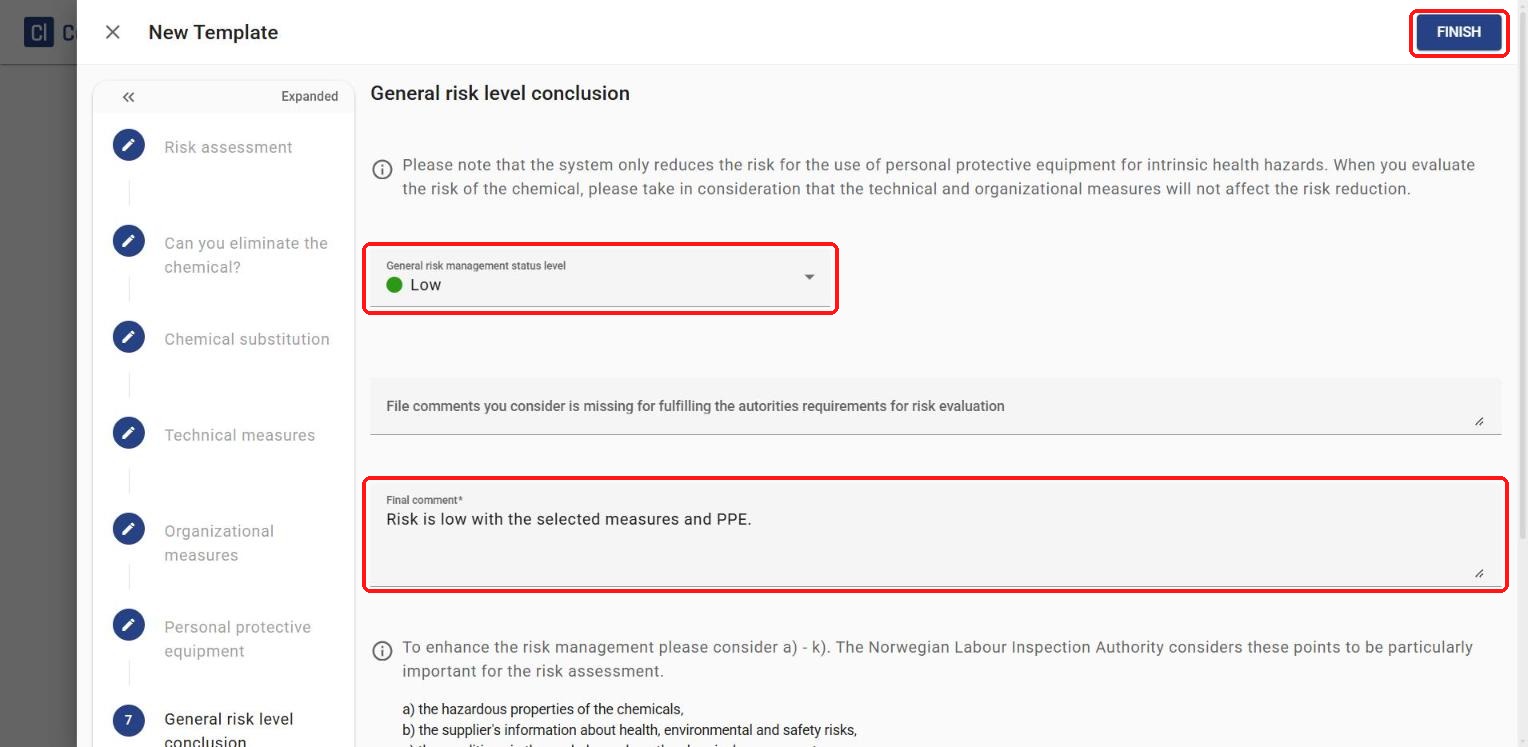
In the last step, General risk level conclusion, set the General risk management status level (Low, Medium or High) and write a Final comment (required). The page also lists points a)–k) that the Norwegian Labour Inspection Authority considers particularly important for the risk assessment. Click Finish.
15
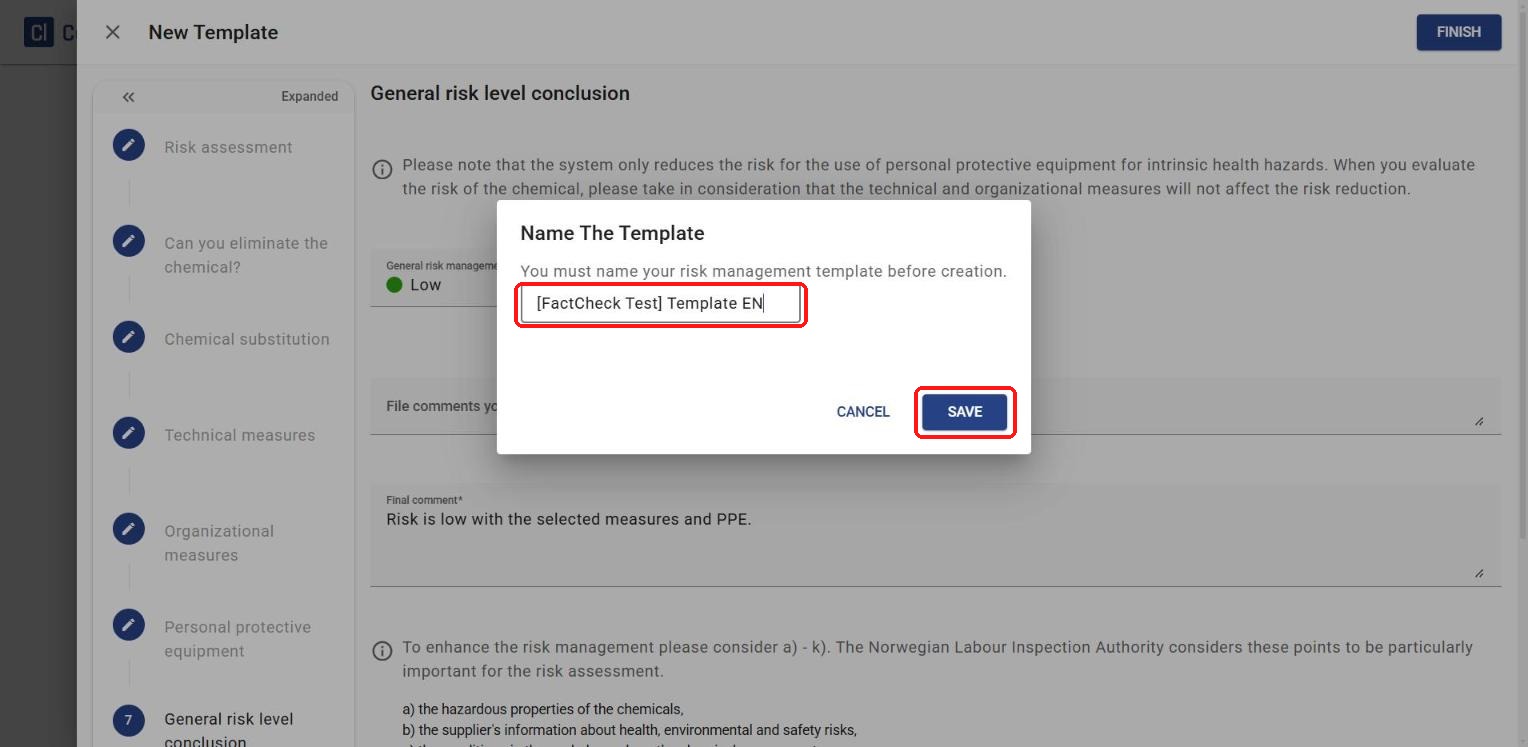
A new window opens. Enter a name for the template and click Save.
16
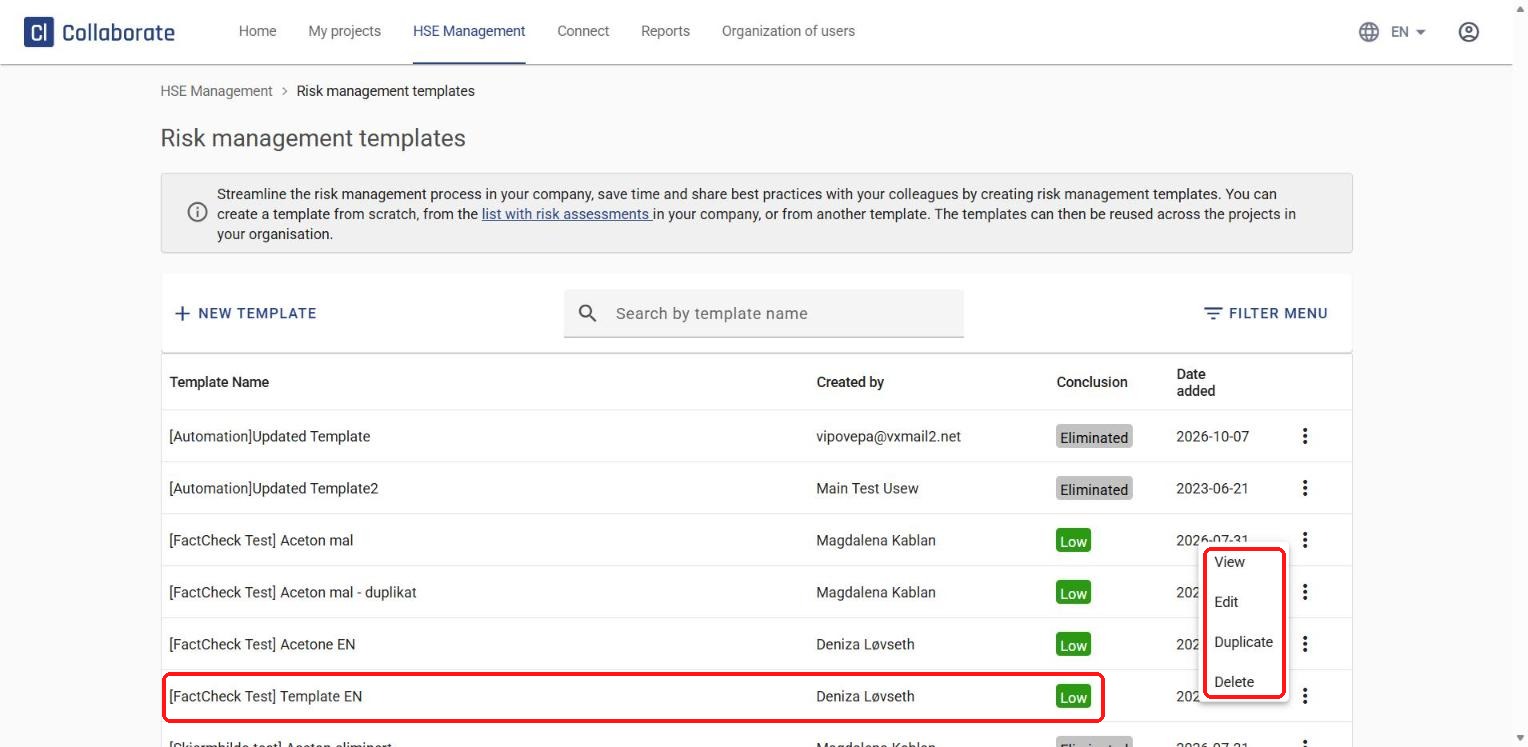
You return to the list of risk management templates, where your new template now appears. Use the three dots to the right of the template to View, Edit, Duplicate or Delete it.